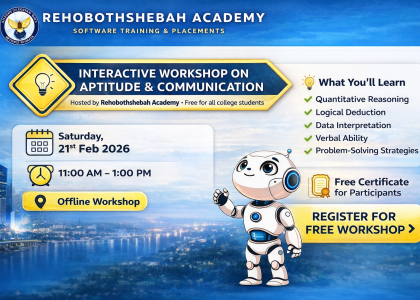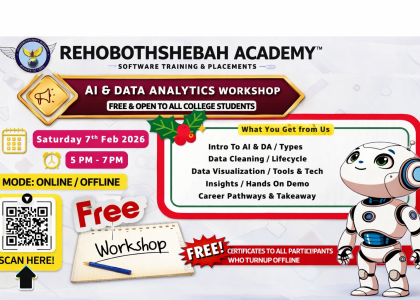
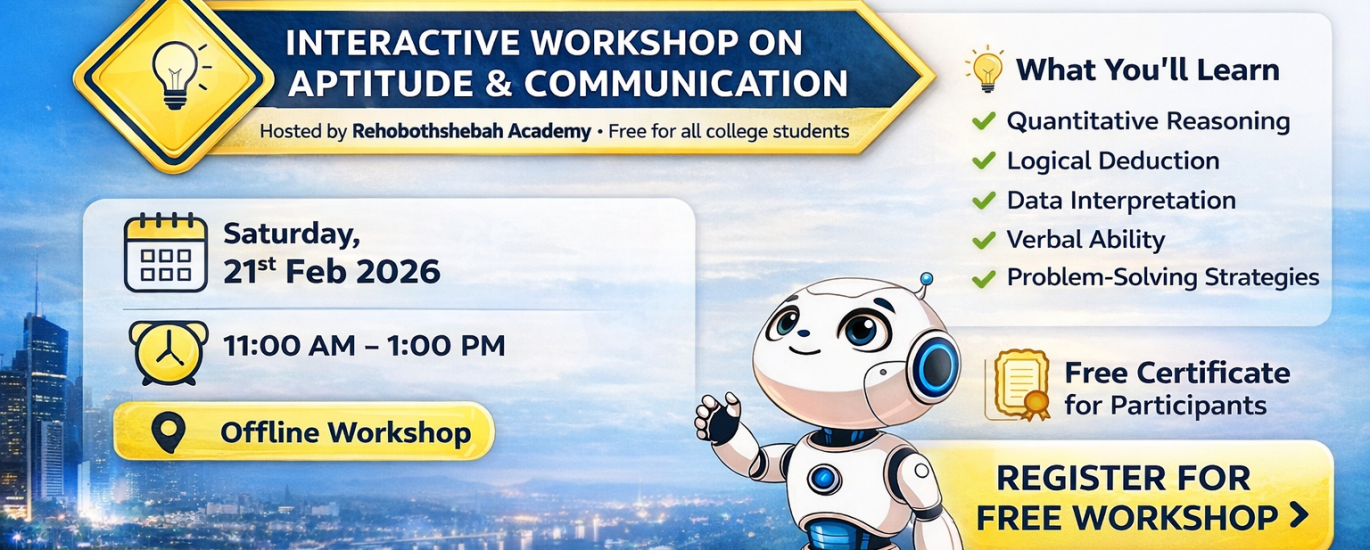
In today’s competitive academic and professional environment, success depends on more than just textbook knowledge. Employers and institutions increasingly value candidates who can think analytically, communicate clearly, and solve problems efficiently. To help students build these essential skills, Rehobothshebah Academy is organizing a Free Interactive Workshop on Aptitude & Communication designed specifically for college students preparing for placements and future careers.
This workshop is not just another lecture session — it is a hands-on learning experience that focuses on practical problem-solving techniques, communication development, and confidence building.
In this blog, we’ll explore why aptitude and communication skills matter, what students will learn in the workshop, and how attending such programs can positively impact academic and career growth.
Why Aptitude Skills Are Crucial for Students
Aptitude skills are often the first filter used by companies during recruitment. Many students lose opportunities not because they lack knowledge, but because they struggle in aptitude rounds.
Aptitude tests evaluate how well you can:
- Analyze numerical data
- Identify logical patterns
- Solve problems under time pressure
- Interpret information accurately
- Make quick decisions
These skills are not only useful for placement exams but also for competitive tests, higher studies entrance exams, and real-world decision making.
Developing aptitude improves mental agility and helps students approach problems systematically rather than randomly.
Communication: The Skill That Multiplies Opportunities
Communication plays a defining role in academic success and professional growth. Even the most talented students may struggle in interviews or group discussions if they cannot express ideas clearly.
Strong communication skills help students:
- Speak confidently during interviews
- Present ideas logically
- Write professional emails and reports
- Collaborate effectively in teams
- Build leadership presence
The workshop integrates communication training alongside aptitude exercises so students learn how to explain solutions, articulate reasoning, and interact professionally.
Why Interactive Workshops Are More Effective Than Passive Learning
Traditional classroom teaching often focuses on theory. However, skills like reasoning and communication improve only through practice.
Interactive workshops offer:
- Real-time problem solving
- Instant feedback from trainers
- Peer learning opportunities
- Hands-on exercises
- Structured guidance
Students retain concepts better when they actively participate rather than simply listen.
This workshop uses practical activities, quizzes, and guided discussions to ensure participants leave with usable skills.
Key Topics Covered in the Workshop
Quantitative Reasoning
Students will learn techniques to solve numerical questions faster and more accurately.
Topics include:
- Percentages and ratios
- Time & work problems
- Profit & loss concepts
- Speed calculations
- Shortcut methods
These concepts are essential for placement tests and competitive exams.
Logical Deduction
Logical reasoning trains the brain to analyze situations systematically.
Participants will practice:
- Pattern recognition
- Statement analysis
- Puzzle solving strategies
- Sequential reasoning
- Analytical thinking methods
Logical deduction skills improve decision making and problem solving across fields.
Data Interpretation
Modern industries rely on data-driven decision making.
This module will teach students how to:
- Understand charts and graphs
- Compare datasets quickly
- Identify trends and patterns
- Extract meaningful insights
These skills are highly valuable in business, engineering, management, and analytics careers.
Verbal Ability
Verbal skills influence interviews, presentations, and workplace communication.
Students will practice:
- Vocabulary enhancement techniques
- Sentence correction methods
- Reading comprehension strategies
- Professional communication tips
Improving verbal ability builds confidence and clarity in expression.
Problem Solving Strategies
This session combines all topics into a structured approach.
Students will learn:
- How to break complex questions into steps
- Time management during exams
- Smart elimination techniques
- Accuracy improvement methods
These strategies help students perform better in aptitude tests and real-world challenges.
Benefits of Attending the Workshop
Placement Readiness
Aptitude rounds eliminate many candidates early in recruitment. This workshop equips students with techniques to clear those rounds confidently.
Confidence Boost
Interactive sessions encourage students to speak, discuss, and present solutions, improving their self-confidence.
Practical Learning
Participants receive guided practice and immediate clarification of doubts, which accelerates understanding.
Career Awareness
Students gain insight into how aptitude and communication influence interviews, promotions, and workplace performance.
Certification
Participants receive a certificate acknowledging their participation, which can enhance resumes and professional profiles.
The Importance of Offline Learning Experiences
Although online courses are popular, offline workshops offer unique advantages:
- Better concentration without distractions
- Real-time interaction with trainers
- Stronger engagement and participation
- Improved concept retention
- Opportunity for networking
Face-to-face learning helps students absorb concepts faster and feel more motivated.
Who Should Attend This Workshop?
This workshop is ideal for:
- Final-year students preparing for placements
- Second-year students starting aptitude preparation
- First-year students building foundational skills
- Students preparing for competitive exams
- Anyone seeking to improve communication confidence
Regardless of your academic stream, these skills are universally useful.
How Aptitude & Communication Skills Impact Long-Term Career Growth
Developing these skills benefits students beyond college.
They help professionals:
- Analyze workplace problems logically
- Present ideas confidently in meetings
- Communicate effectively with teams and clients
- Make strategic decisions
- Adapt to new challenges quickly
Employers value candidates who can think clearly and communicate effectively — making these skills essential for long-term success.
Why Students Should Take Advantage of Free Skill-Building Opportunities
Many professional training programs require significant fees, making them inaccessible to some students.
Free workshops provide:
- Access to expert guidance
- Exposure to real-world techniques
- Opportunity to explore career skills
- Practical learning without financial burden
Students who attend such programs often gain an advantage over peers who rely solely on classroom learning.
Final Thoughts
Success in today’s competitive environment depends on a combination of knowledge, reasoning ability, and communication skills. Workshops like this help students move beyond theory and develop practical abilities that directly influence academic and professional outcomes.
Attending this Free Interactive Workshop on Aptitude & Communication can be a valuable step toward stronger placement readiness, improved confidence, and better career opportunities.
Investing just a few hours in skill development today can lead to years of professional growth tomorrow.
FAQs
1. Who can attend the workshop?
Any college student interested in improving aptitude and communication skills can participate.
2. Is there any registration fee?
No, the workshop is completely free.
3. Will participants receive certificates?
Yes, certificates will be provided to attendees.
4. Do I need prior aptitude knowledge?
No prior knowledge is required; the workshop is beginner-friendly.
5. What should I bring?
Carry a notebook, pen, and readiness to participate actively.
6. How long is the workshop?
The session lasts approximately two hours.
7. Will there be practice questions?
Yes, participants will solve problems during the session.
8. Is this helpful for placements?
Yes, the topics align with commonly asked placement test questions.
9. Can first-year students attend?
Yes, early preparation is highly beneficial.
10. How do I register?
You can register through the provided QR code or registration link.